PRODUCT RESEARCH / UNDER-SINK REVERSE OSMOSIS
Waterdrop G3P800 Review: Is This 800 GPD Tankless RO System Worth It?
A strong starting point for a plumbed-in kitchen upgrade. The real decision is installation, certified claims and ongoing costs—not the biggest GPD number.
Affiliate disclosure: WattPick Lab may earn a commission when you purchase through links on this page, at no additional cost to you. How our links work.
QUICK VERDICT
A sensible tankless shortlist candidate.
The G3P800 makes sense when you want filtered water at a dedicated kitchen faucet, can modify the plumbing and value on-demand production. Its headline specifications are 800 GPD and a 3:1 pure-to-drain ratio, with status monitoring at the faucet. [1]
Best fit: a household committed to under-sink RO that wants to compare a capable base system against premium upgrades. Main compromises: installation, electricity, model-specific filters and recurring replacement costs.
Start here before moving to the standard X12. Pay more only when its higher rated output, mineralization and faucet features solve a need you actually have. If plumbing changes are off the table, compare AquaTru’s countertop models first.
*Calculated from current listed cartridge prices and nominal replacement intervals; not measured ownership cost. See the assumptions below.
What is the Waterdrop G3P800?
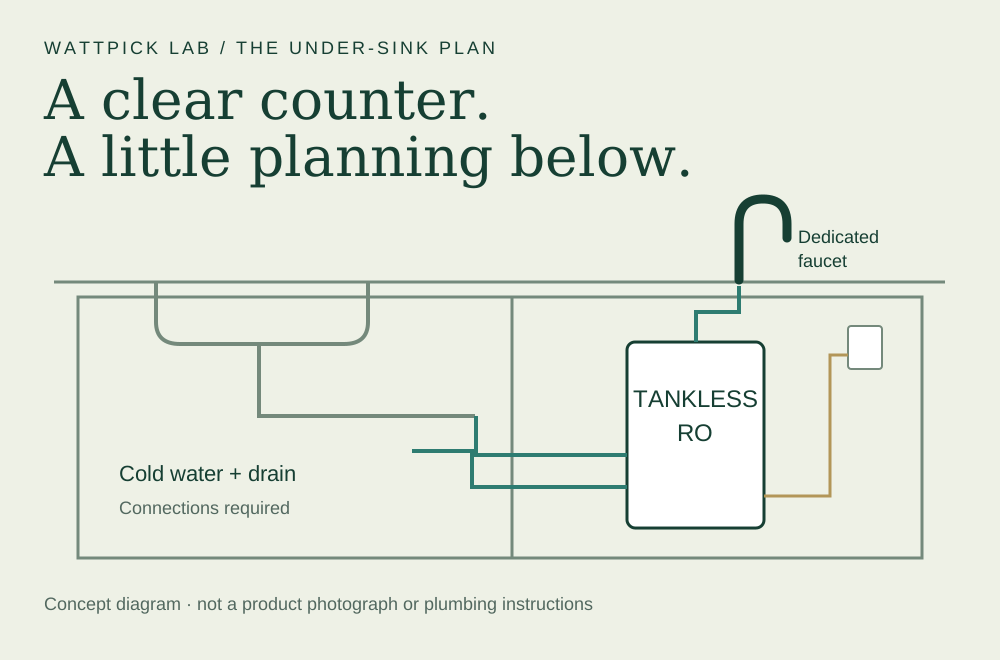
It is an electric, tankless, under-sink reverse-osmosis system. A separate drinking-water faucet delivers the filtered output; the main kitchen tap remains available for ordinary washing. Removing the storage tank can simplify the cabinet layout, but the unit, tubing and filter access still need space.
| Specification | G3P800 base configuration |
|---|---|
| Type | Tankless under-sink RO; electrical power required |
| Rated output | 800 US gallons per day |
| Pure-to-drain | 3:1 advertised ratio |
| Dimensions (L × W × H) | 18.11 × 5.67 × 17.73 inches on the current product page |
| Filtration | Three replaceable cartridges; marketed as 10-stage filtration |
| Faucet | TDS display and filter-life indication |
| Mineralization | Not included in the base configuration; optional bundles exist |
| Warranty | 1 year, subject to manufacturer terms |
| Feed water | Municipal tap water; manual operating range 14.5–87 psi and 41–100°F |
The linked manual rounds the enclosure to 18.12 × 5.67 × 17.72 inches. Allow room for tubing, the UV module and cartridge removal; a cabinet that only matches the enclosure dimensions is not an installation plan.
Filtration & certification: match the claim to the document.
The performance sheet names IAPMO R&T as the certifier against NSF/ANSI 42, 53 and 58 for the claims specified on that sheet, plus NSF/ANSI 372 for lead content. NSF/ANSI identifies the standards; it does not mean that NSF itself issued this certification. [3]
Aesthetic effects
The G3P800 sheet includes a chlorine reduction entry.
Specified health-effect claims
The sheet includes named PFAS entries such as PFOA and PFOS.
Reverse osmosis
TDS and specified reduction claims; check the exact model’s sheet.
Component lead content
A materials requirement, not a claim that the filter removes lead from water.
The sheet also reports additional testing. A laboratory test table is not automatically an additional certification. We do not turn its broader test results into a blanket “removes everything” claim or add a Standard 401 certification to this review. [3]
NSF explains that Standard 58 includes required TDS reduction and optional, specific contaminant claims. A standard number alone cannot establish suitability for the particular substance in your supply. Standard 372 addresses lead content in components. [4] [5]
800 GPD: useful context, not a household target.
The rating describes production capability under test conditions. It does not mean your household needs, or will draw, 800 gallons of drinking water daily. The manual identifies 30 psi dynamic feed pressure and 77°F water for its daily-production rating. [2]

Think about the task: filling a glass, a kettle or a large cooking pot. Higher output matters most when the wait repeatedly gets in your way. Household headcount alone cannot establish which model is enough; feed-water temperature, pressure, filter condition and your dispensing pattern all matter.
What the 3:1 pure-to-drain ratio means.
RO sends a reject stream to the drain. Waterdrop’s advertised ratio is three parts purified water for one part drain water. At that ratio, producing three gallons of purified water involves four gallons of input before considering other operating water use. [1]

Short draws, flushing and actual operating conditions can change total consumption. Our buying takeaway is to compare like-for-like definitions and conditions—not to assume the headline ratio describes every day in every kitchen.
Smart faucet: useful status, limited conclusions.
The included faucet indicates TDS and filter-life status. That can make a cartridge reminder easier to notice than a light hidden in the cabinet. [1] [2]

TDS is an aggregate dissolved-solids indicator, not a contaminant-by-contaminant result. A low number cannot tell you that every substance or microorganism of concern is absent. We treat the display as operating information, not a replacement for appropriate testing. The included UV module likewise is not a reason to assume any untreated source is safe. [2] [3] [4]
Installation: plan the cabinet before ordering.
Tankless does not mean installation-free. The manual calls for cold-water feed and drain connections, a dedicated faucet and electrical power. You may need a faucet hole and a drain-saddle hole; check the sink or countertop material and local installation requirements before drilling. [2]
- Measure the usable space. Include filter access, tubing bends, the UV module and existing disposal or waste plumbing.
- Check the connections. Identify your cold-water shutoff and drain layout, and confirm that the included fittings suit your installation.
- Plan the faucet and outlet. Confirm a suitable mounting location and accessible electrical supply.
- Follow startup instructions. Leak-check and flush as directed in the exact manual supplied with the unit.
The manual specifies an initial 30-minute flush. Do not interpret that as the total installation time. If you are not comfortable making the connections, budget for a plumber. Renters should obtain permission for modifications or consider a countertop alternative. [2]
Open the official installation manual ↗
Filters & long-term ownership cost.
Model-specific replacement cartridges are a continuing commitment. Compare their cost and availability before choosing the appliance. Waterdrop lists the following base cartridges and nominal time intervals. [7] [8] [9]

| Cartridge | Nominal interval | Listed price | Annualized cost |
|---|---|---|---|
| G3-N1CF | 6 months | $29.99 | $59.98 |
| G3-N3CB | 12 months | $29.99 | $29.99 |
| G3P800-N2RO | 24 months | $139.99 | $70.00 |
| Total | Steady-state average | — | ≈ $159.97/year |
The calculation is 2 × $29.99 + $29.99 + $139.99 ÷ 2 = $159.965, rounded to $159.97. It is an annualized budget, not a bill that arrives every year. The official page and older manual show differing gallon limits, so use the current exact-cartridge instructions and replacement reminder rather than a single universal gallon figure. [1] [2] [7] [8] [9]
FIVE-YEAR PLANNING EXAMPLE
About $800 as an annualized reserve.
Five years × $159.97 ≈ $800. A replacement schedule can cost less within that window because the initial cartridges come with the system: 10 CF, 5 CB and 2 RO replacements through month 60 would total $729.83 at these prices. Excluding the replacements due exactly at month 60 gives $669.85.
These examples assume time limits trigger replacement and prices remain constant. Higher usage or difficult feed water can bring changes forward. Add purchase price, installation, water, electricity, optional cartridges and any other maintenance to compare total ownership cost.
G3P800 vs X12: buy the upgrade for a reason.
The standard mineralizing X12 offers greater rated production and a more capable control faucet. Those differences can matter for frequent larger fills. They do not establish better real-world reliability or prove the extra cost is worthwhile for your kitchen. [1] [6]
| Feature | G3P800 | Standard X12 |
|---|---|---|
| Rated output | 800 GPD | 1,200 GPD |
| Converted rating* | ≈ 0.56 GPM | ≈ 0.83 GPM |
| Pure-to-drain | 3:1 | 3:1 |
| Mineralization | Not in base configuration | Included |
| Faucet | TDS / filter status | Status + adjustable dispensing volumes |
| Stated annual filters | ≈ $159.97 | ≈ $172.97 |
| Listed warranty | 1 year | 2 years |
*GPD ÷ 1,440; calculated, not measured. Waterdrop’s current X12 family includes multiple configurations. Confirm the exact model, faucet, filters and warranty at checkout. Mineralization is a feature preference, not evidence of a health benefit.
Our take: shortlist the G3P800 when you want the tankless format without paying for extra output or mineralization. Compare the standard X12 when those particular additions are priorities. Compare current bundle prices rather than anchoring the decision to an expiring promotion.
G3P800 vs AquaTru: choose the installation format first.
Here we mean AquaTru Classic and Carafe countertop models, not every product sold under the AquaTru name. Their manuals describe fillable countertop appliances that avoid under-sink plumbing installation. [10] [11]
PLUMBED-IN / G3P800
Water at a dedicated faucet
- Appliance lives inside the cabinet.
- Cold-water, drain and power connections.
- No routine manual feed-tank filling.
- A fixed kitchen installation to plan around.
COUNTERTOP / AQUATRU
A refill-and-dispense routine
- Uses counter space and electrical power.
- Refill the feed tank and empty reject water.
- Clean tanks and replace model-specific filters.
- Easier to consider when plumbing changes are unwanted.
For a renter or someone expecting to move, avoiding plumbing work can outweigh a higher production rating. For an owner who wants an integrated tap, repeatedly refilling a countertop machine may be the bigger compromise. We have not measured taste, speed or contaminant reduction across these products and do not declare a filtration winner from format alone.
Pros & cons
Reasons to shortlist it
- On-demand RO without a separate storage tank.
- 800 GPD rated output and an advertised 3:1 ratio.
- Faucet-based maintenance information.
- Exact-model performance documentation to inspect.
- A lower-feature alternative to the standard X12.
Compromises to accept
- Plumbing work, faucet space and electricity required.
- Model-specific filters and recurring costs.
- Base configuration lacks mineralization.
- One-year listed warranty versus two on the standard X12.
- Published specifications cannot establish noise, taste or reliability in your home.
Who should buy the G3P800?
Consider it if you are specifically shopping for an under-sink tankless system, can accommodate its installation and want to budget for ongoing filters. Frequent drinking-water and cooking-water use can make the dedicated-faucet format convenient.
Look elsewhere if you cannot modify the plumbing, need operation without power, want generic replacement cartridges or have a water problem outside the documented claims and operating conditions. A smaller household may value this format too, but household size alone is not a reason to buy 800 GPD.
FINAL VERDICT
Start with fit. Then decide whether to spend more.
The G3P800 earns a place on a tankless RO shortlist because its production rating, cabinet format and faucet monitoring form a practical package. The strongest reason to choose it is a good match with your kitchen and maintenance budget.
Check the exact reduction claims first. Then check installation and replacement costs. Compare the standard X12 for faster rated production and mineralization, or AquaTru Classic / Carafe for a countertop route. Our recommendation is based on documents and buying requirements; long-term performance remains untested by WattPick Lab.
Frequently asked questions
Is the Waterdrop G3P800 NSF certified?
Waterdrop’s performance sheet identifies IAPMO R&T as the certifier against NSF/ANSI 42, 53 and 58 for specified claims, plus 372 for lead content. NSF/ANSI names the standards; it does not mean NSF is the certifier. Check the exact model and current performance sheet for your concern.
Does 800 GPD mean I will use 800 gallons every day?
No. It is a rated production figure. Dividing by 1,440 minutes gives about 0.56 US GPM, but that conversion is not an independent measurement of faucet flow. Your temperature, feed water and filters affect actual performance.
How much water goes to drain?
The advertised 3:1 pure-to-drain ratio means one part reject water for three parts purified water under the stated conditions. It does not mean three gallons are wasted for one gallon to drink. Flushing and operating conditions can change total water use.
Does the G3P800 add minerals back?
The base G3P800 configuration does not include remineralization in Waterdrop’s comparison. Separate mineralization bundles and add-on cartridges exist, so check exactly what your selected offer contains.
Does the G3P800 work without power?
No. It is an electrically powered tankless system and requires a suitable outlet. It is not an emergency water supply during a power outage.
How much should I budget for replacement filters?
At the listed cartridge prices and 6/12/24-month intervals, annualized base-cartridge cost is about $160. This excludes optional mineral cartridges, installation, electricity, water and taxes. Actual replacement timing and future prices may differ.
Is it suitable for every water source?
No. The manual lists municipal tap water as the feed-water requirement and an operating range of 14.5–87 psi and 41–100°F. Source-water problems require suitable testing and treatment advice; a low TDS reading or the presence of UV is not a universal safety guarantee.
Sources & methodology
Sources checked September 27, 2026. We prioritize exact-model manufacturer manuals and performance sheets; NSF explains the scope of the standards. Prices and configurations can change. We do not assign a star rating from specifications alone.
- Waterdrop G3P800 US product page ↗
- G3P800 official installation and owner’s manual (PDF) ↗
- G3P800 performance data sheet (PDF) ↗
- NSF: what Standard 58 covers ↗
- NSF: Standard 372 addresses lead content ↗
- Waterdrop X12 version comparison ↗
- CF replacement cartridge ↗
- CB replacement cartridge ↗
- G3P800 RO replacement cartridge ↗
- AquaTru Classic owner’s manual (PDF) ↗
- AquaTru Carafe owner’s manual (PDF) ↗
All diagrams on this page are original WattPick Lab illustrations. They are not product photography, actual faucet-interface captures or measured test results.